
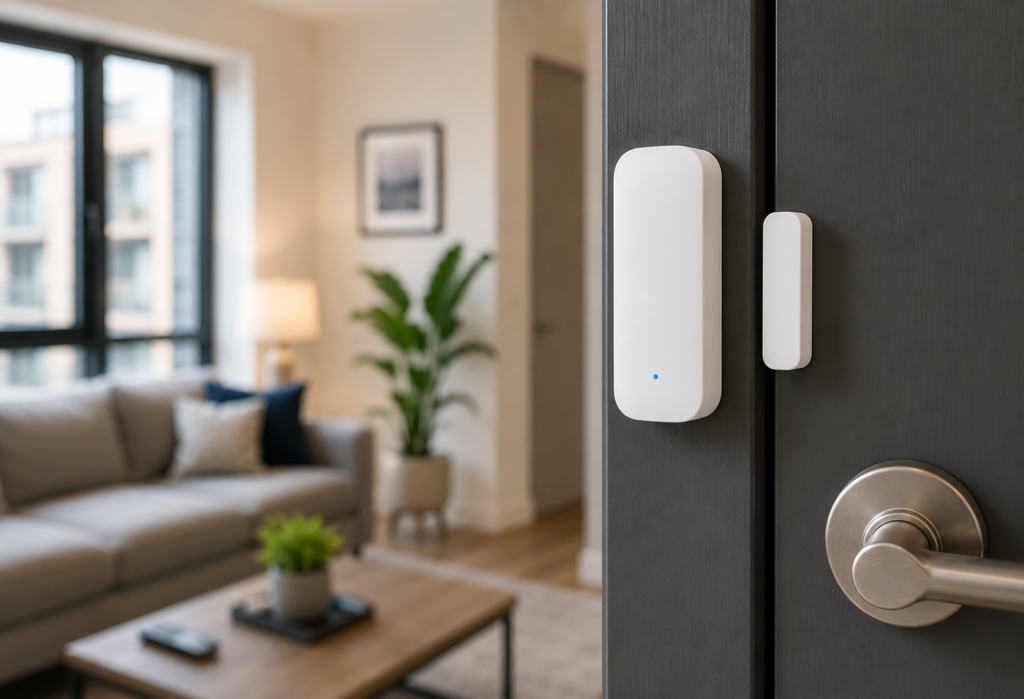
These compact devices instantly alert you whenever a door or window is opened, helping you keep an eye on your home whether you’re inside or away. In this guide, we’ll review the best smart door sensors for apartments, compare their key features, and help you choose the right option for your budget and smart home setup.
Why apartment security matters
The issues regarding safety for apartments are different from those of houses. It may be difficult to secure an apartment because of the many doors and shared entryways. While some complexes have security systems in place, it is helpful for each unit to have another measure of security.
Benefits of smart door sensors
Door sensors will alert you immediately once there’s an activity in your door or window, and the notifications come even if you’re not in your house. They’re cheap, easy to install, and have the ability to be integrated with other smart home systems like Alexa, Google Home, and HomeKit by Apple.
Why renters prefer wireless solutions
Many people who rent their accommodation require security gadgets that do not involve any drilling into walls. Wireless door sensors take only a few minutes to install with the help of adhesives. They can be easily detached from walls or door frames once it is time to move out.
What this guide covers
Here you will see a review of the best smart door sensors available for use in apartments in America. The guide will compare the performance and other aspects of these devices, and also give some buying advice that will help you pick a good door sensor for your apartment.
Table of Contents
What Is a Smart Door Sensor?
How Door Sensors Work
Smart door sensors are quite intelligent gadgets designed to sense whether there are openings or closings of the doors or windows. There are mainly two parts in a smart door sensor: a sensing device and a magnet. These two components are fixed near the door frame and the door respectively.
Contact sensor technology
There are some basic components for working of these sensors. The main device has a reed switch which is basically a magnetic switch. In case when the door is closed, the magnet keeps the position of the reed switch constant but once the door opens, the magnet gets away from the reed switch.
Open/close detection
This change in the state of the switch informs the sensor that the door has been opened. Then, the information is transmitted from the sensor to your mobile device via your WiFi network or a special hub. Some sensors also inform when a door has been open for a while, delivering reminders.
Instant alerts
The best thing about smart door sensors is how quick they are. Almost all good sensors will send you a notification to your phone almost instantly after detecting any activity. In other words, you’ll be immediately aware of anyone who enters your apartment, be it a family member or some unexpected guest.
Why They’re Useful for Apartments
Easy installation
Installation takes only minutes and does not require the use of any special equipment. Since the sensor is small and light, the glue is capable of holding it while avoiding any surface damage during removal. With easy installation, you will be able to protect your apartment from the first days.
No drilling required
Ordinary door alarm systems normally need screwing or drilling. Instead of that, a smart door sensor uses strong industrial-strength adhesive strips to attach it to any surface: metal, wooden, or even painted. You will be able to keep your security deposit untouched.
Affordable security upgrade
One sensor usually costs from $15 to $40 which makes it one of the most affordable security options. Consider installing a professional system: it will cost you hundreds or even thousands of dollars.
Smart door sensors provide instant alerts whenever an apartment door is opened, helping renters improve home security without permanent modifications. Consumer Reports also recommends comparing home security products based on performance, ease of use, and value.
Why Apartment Renters Need Smart Door Sensors
Early Intrusion Detection
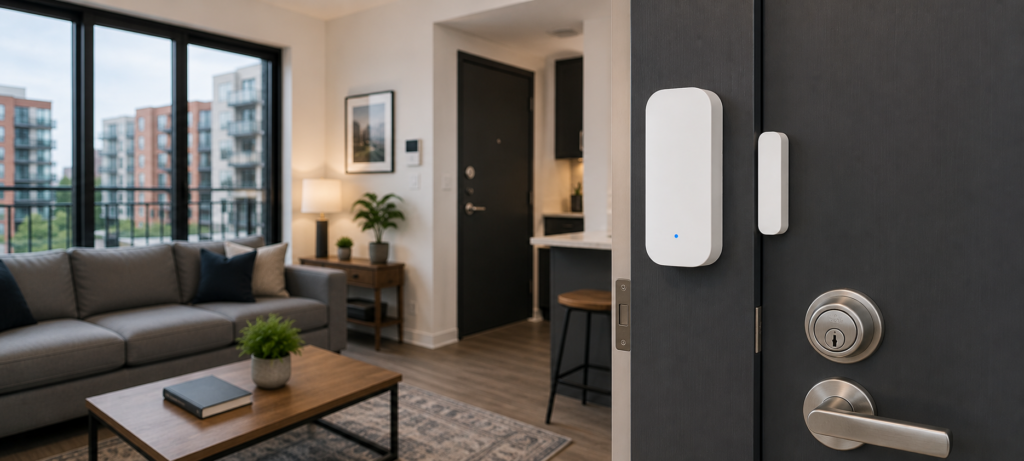
A smart door sensor is always the first defense mechanism against intrusions. It detects any attempts of intrusion right at the entrance point, providing you with the necessary time to react. For apartment dwellers who have their neighbors close by, an early alert can be a life-saver.
I once had a friend who used to live in a ground-floor apartment. Her door sensor alarmed her about someone trying her balcony door at 2 AM. The alarm awakened her, and she had enough time to turn on the lights and call for the security guards.
Real-Time Smartphone Alerts
One cannot overestimate the importance of real-time notifications. No matter where you are, whether you are at work, traveling, or simply sleeping in another room, you will instantly know about the occurrence of an event. Such notifications usually contain the exact time of intrusion and information about the affected door/window.
Package and Entry Monitoring
Apart from security, door sensors make life easier for tenants in many ways. Tenants may keep track of when deliveries are being made, when roommates are coming back, or even when maintenance staff are entering the apartment (with consent). This record of entry and exit is something most tenants need.
Works with Existing Security Systems
Smart door sensors can work with existing security systems. In case tenants already have an existing security system in their apartment building or some other smart devices at home, these sensors will be compatible.
Besides physical security, protecting connected devices is equally important. The FTC recommends securing internet-connected devices by using strong passwords, enabling automatic updates, and securing your Wi-Fi network.
Key Features to Look For
Battery Life
Batteries differ widely, lasting anything from six months to five years. Sensors with extended battery life will save you maintenance work and provide reliable security all year around. It is advisable to choose those devices which notify about low batteries in advance.
Lithium batteries are the best choice because they last longer and function properly even in extreme temperatures. The temperature inside some apartment buildings may fluctuate greatly.
Wireless Connectivity
WiFi
WiFi-powered sensors can be connected right to your home’s wireless network. The advantage of using these sensors is their ability to deliver the most stable and fast communication. However, they rely on the stability of your WiFi network and may have high energy consumption.
Zigbee
A Zigbee-powered sensor requires a dedicated hub but delivers the longest battery life and creates a mesh network. It is advisable to use Zigbee sensors in case you plan to add many other devices to your home.
Z-Wave
Z-Wave sensors also need a hub but are known to perform reliably. They have been around for much longer than other connectivity options and are compatible with different smart home devices.
App Notifications
Everything starts or ends with the smartphone application. A quality app provides users with customizable notification options, activity history, and ease of sensor management. Choose those apps that enable you to change sensitivity level, add silence mode, and manage your sensors per room and purpose.
Smart Home Compatibility
Alexa
Integration with Amazon Alexa means the option to control and automate your device using other Alexa compatible devices. This way you may create some actions such as “when my front door is open, light up the living room.”
Google Home
Voice control features and automation functions are provided by Google Home compatible sensors. Google’s platform integrates well if you own an Android phone or any other Google smart home device.
Apple Home
If you have been using Apple devices and have built an ecosystem around them, HomeKit compatible sensors will be very convenient since they provide local processing and are safe to use.
Easy Installation
Quality sensors will come with good adhesive tape, instructions, and alignment tools. The best sensors magnetically click into place to allow easy installation.
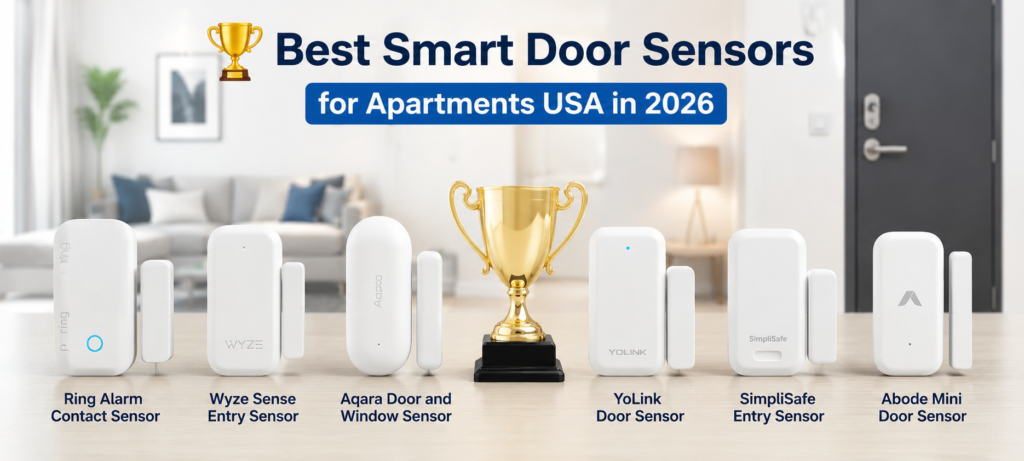
Best Smart Door Sensors for Apartments USA in 2026
Quick Comparison Table
| Sensor | Connectivity | Battery Life | Smart Home Support | Price Range | Best For |
|---|---|---|---|---|---|
| Ring Alarm Contact Sensor | WiFi/Z-Wave | 3 years | Alexa | $20-25 | Overall best |
| Wyze Sense Entry Sensor | WiFi | 18 months | Limited | $6-8 | Budget choice |
| Aqara Door and Window Sensor | Zigbee | 2 years | HomeKit/Alexa/Google | $12-15 | Smart home users |
| YoLink Door Sensor | LoRa | 5+ years | Limited | $16-20 | Long range |
| SimpliSafe Entry Sensor | Proprietary | 3-5 years | Limited | $15-18 | Easy app |
| Abode Mini Door Sensor | WiFi/Z-Wave | 2 years | All major platforms | $25-30 | Premium features |
🥇 Best Overall: Ring Alarm Contact Sensor
Key features
The Ring Alarm Contact Sensor is a great combination of functionality, quality, and cost of ownership. This contact sensor supports two types of connections – WiFi and Z-Wave, giving a user an ability to choose. The device has a built-in tamper switch that triggers an alert whenever someone tries to tamper the sensor.
Battery life of up to three years and a good notification about low batteries directly in the Ring application. Operating temperature range is from -5°F to 120°F which makes it ideal for apartment with different weather conditions.
Pros
- Great battery life
- Dual connectivity options
- Good adhesive mounting
- Tamper alarm
- Reliable notifications
- Supports Ring ecosystem
Cons
- Ring Protect subscription is required for certain functions
- A bit bigger than competitors
- Poor integration with third party services
Best for
People who rent and require simple door monitoring solution that can be later expanded into a full-fledged security system from Ring.
💰 Best Budget Pick: Wyze Sense Entry Sensor
Affordable option
Priced at less than $10, the Wyze Sense Entry Sensor offers good value. It comes with everything you need – instant alerts, straightforward installation, and battery-powered operation. This sensor needs to be connected via the company’s bridge, plugged into your router.
Easy setup
The installation process is completed within 5 minutes using the Wyze mobile app. All you have to do is remove the battery tab, and the device will connect on its own. You only need to name your sensor and place it correctly.
The Wyze sensor is a good choice for tenants looking for a door monitor without any additional smart home functions.
🔐 Best for Smart Home Integration: Aqara Door and Window Sensor
HomeKit support
This device has HomeKit compatibility. Therefore, it is suitable for use by Apple owners. You just need to connect the sensor to the HomeKit system because there is no need for any bridge in between.
Automation features
Through HomeKit compatibility, you get access to numerous possibilities of automation. You can make scenes as “if the bedroom door shuts after dark, then turn off all the lights and activate security system” or “if the front door opens during the daytime, play some music and change temperature settings.”
Moreover, the sensor is compatible with both Alexa and Google Home via Aqara Bridge. Battery life lasts for two years.
🏠 Best for Renters: YoLink Door Sensor
Long range
YoLink sensors employ LoRa technology that provides an unbelievable range of up to 1/4 mile in an open space. For tenants living in multi-storey apartment buildings with dense walls, this ensures stable connectivity without connectivity problems typical of some WiFi-enabled sensors.
Easy installation
No tools and less than two minutes are needed to install a YoLink door sensor. Magnetic mounting technology facilitates placing sensors easily while built-in alignment guides ensure proper installation. The waterproof design can be used both indoors and for monitoring balcony doorways.
The YoLink sensor’s five-year battery life is unique to its class. The sensors work with the help of a hub connected to your router, and one hub allows using up to 32 sensors simultaneously.
📱 Best App Experience: SimpliSafe Entry Sensor
The SimpliSafe app provides the ideal user experience among all home security apps on the market. The interface is elegant, notifications are straightforward, and sensor management is user-friendly. You can easily access history logs, change settings, and control numerous sensors from a single page.
The sensor has good performance in terms of battery capacity which lasts 3-5 years and effective detection. Although the sensor performs optimally only in a SimpliSafe ecosystem, the better user experience provided by the app makes it more appealing for people valuing usability.
⚡ Best Premium Option: Abode Mini Door Sensor
The Abode Mini brings premium functionality in a small body. The sensor supports WiFi, Z-Wave, and Zigbee networks to work seamlessly with almost any smart home system available. The device has advanced features such as sensitivity settings and environment monitoring.
Build quality surpasses most of the competition, with solid metal construction and industrial adhesive for mounting.
Smart Door Sensors vs Traditional Door Alarms
| Feature | Smart Door Sensor | Traditional Door Alarm |
|---|---|---|
| Smartphone Alerts | Yes – instant notifications | No – local sound only |
| Automation | Yes – triggers smart devices | No |
| Remote Monitoring | Yes – check from anywhere | No |
| Installation | Easy – adhesive mount | Moderate – may need screws |
| Battery Life | 1-5 years | 6-12 months typically |
| Cost | $10-30 per sensor | $15-25 per alarm |
| Smart Home Integration | Yes – multiple platforms | No |
| Customization | High – app controls | Low – basic settings |
It is evident from the comparison above as to why intelligent door sensors have overtaken conventional door alarms in terms of apartment installations, offering much more benefits.
Best Places to Install Door Sensors in an Apartment
Front Door
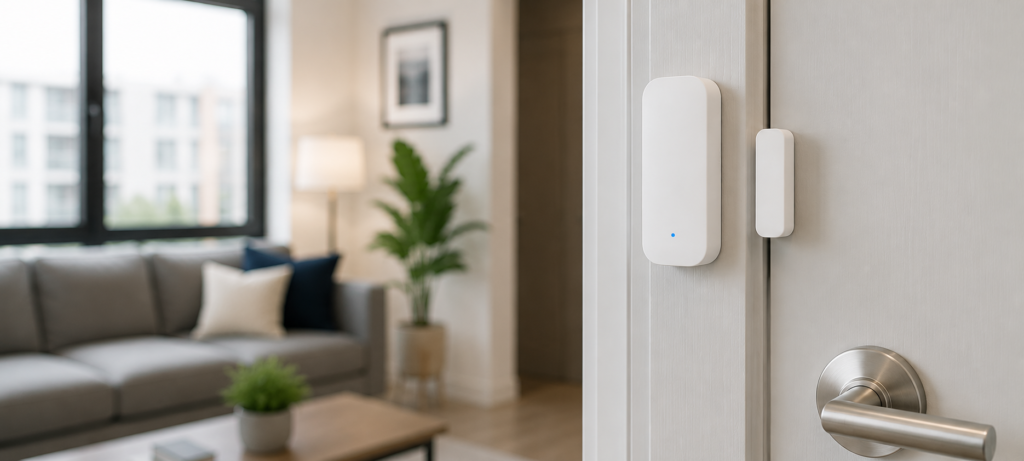
The front door is perhaps the best place where a door sensor can be installed due to its being the most used entry point and also because it poses maximum risks to tenants. The sensor should be placed on the side of the door that swings when opening.
Balcony Door
The balcony doors are usually sliding and pose easy ways of access to criminals especially in case of ground floor apartments. They usually have large glass panes that are easily accessible and thus, need door sensors to give warning signals in case of attempted burglaries.
Patio Doors
Like balcony doors, patio doors give you direct access to the outdoors and need to be watched. The sliding system of patio doors can be tampered with from outside and therefore, sensor monitoring is extremely important.
Windows Near Entrances
These do not qualify as entry doors per se but large windows next to entry points need to be taken into consideration.
Installation Tip: Place sensors on the side of doors and windows that open. This ensures proper alignment between the sensor and magnet when closed.
How to Choose the Right Door Sensor
Apartment Size
Large apartments will need sensors that have more range or sensors that are able to connect via mesh networking. For an apartment that is either big or has multiple floors and/or thick walls, Zigbee or Z-wave are great options to consider when building a smart apartment.
Small apartments such as studio or one-bedroom apartments would do just fine with WiFi sensors since WiFi sensors work great in small spaces and don’t require any additional hubs.
Existing Smart Home Setup
If your household already has some smart devices like Alexa, Google Home, or Apple Homekit then you will need to get sensors that are compatible with those systems.
Those who don’t currently have any smart devices in their apartment should think about getting a WiFi sensor first.
Budget
A budget-aware tenant may start by installing just one device on the apartment’s entrance door, adding more later on. The Wyze device provides great value in its basics while the Ring devices offer more options at a somewhat higher price.
Advanced sensors will be useful for the tenants that require special options or plan to connect their systems with professional monitoring services. Usually, the extra price paid initially will pay off in terms of increased battery life and reliability.
Connectivity Needs
It is important to think about the coverage of the WiFi connection and how reliable it is. Frequent interruptions or lack of coverage in some places may require the usage of hub-based systems like Zigbee.
Frequent moving may make the tenants prefer simple WiFi devices while the tenants that live longer in the same place may use more complex systems.
Installation Tips for Renters
No-Drill Installation Methods
The recommended sensors have an adhesive mount which does not involve any drilling. This involves surface cleaning and alignment of the sensors. The surfaces should be cleaned using rubbing alcohol to eliminate oils and dust.
Temperature plays a major role in adhesive mounting of the sensors. Sensors should not be installed in extremely cold or hot temperature conditions.
Adhesive Mounting Tips
Ensure that all old adhesives are stripped off before placing new adhesives. In case of removal and subsequent reinstallation of the sensor, it is advisable to use new adhesive strips and not recycle old ones. In case of mounting in cold conditions, heat the adhesive strip slightly using a hairdryer.
In cases where surfaces are rough, extra adhesives should be used. Full contact should also be ensured by using foam backing. The sensor and magnet should stay aligned for accurate detection.
Sensor Placement Guidelines
Mount the sensors to a distance of at most 1/2 an inch apart when the door is closed. The closer, the better, but the sensors should never touch the magnets as it will lead to deterioration of the magnets over time. Mark the sensor positions using a pencil and then remove the backing tape.
Common Mistakes to Avoid
Installing sensors too far apart
Another mistake is installing sensors and magnets at a distance from each other. The distance between components should be around 1/2 to 3/4 inches. A greater distance can result in missing notifications and getting false ones.
Ignoring battery alerts
A smart sensor warns its user about potential battery problems weeks or even months before the problem occurs. However, these alerts are usually easily ignored. Make notes about battery issues using your phone and have extra batteries handy.
Poor WiFi coverage
Placing sensors where WiFi is bad can lead to a delay in getting notifications or skipping them at all. Use your phone to check WiFi quality in a given area before installing sensors. Also, use WiFi extenders in case of poor WiFi coverage.
Not testing notifications
Often users do not think about checking whether notifications work or not after installation. It is important to test the system by opening and closing the door and receiving notifications on your phone. Remember to test notifications away from home as well.
❓FAQs
Are smart door sensors worth it for apartments?
Definitely. Smart door sensors are very good at providing security value at low cost of under $30 per device. You get peace of mind, intrusion detection capability, and monitoring of movements. For those unable to set up more comprehensive security system because of renting restrictions, this is one of the most valuable security purchases possible.
Do door sensors work without WiFi?
The majority of smart door sensors depend on Internet access for sending smartphone notification messages. Some sensors using hubs can record alarms until connection is restored. Some sensors can activate alarms and other connected smart gadgets without Internet access, while remote notifications need Internet or cellular access.
Can landlords object to door sensors?
No, as high-quality sensors use adhesive installation which does not harm anything. Yet, please read carefully your rental agreement about restrictions of usage of security systems in your apartment. Most landlords will be pleased to hear you care about security.
How long do sensor batteries last?
Battery duration is between 18 months and up to 5 years depending on the particular type of sensor and usage frequency. WiFi sensors are known to drain their battery faster than hub sensors. Low temperatures and frequent door opening are detrimental to battery life; however, lithium batteries outlive alkaline batteries.
Which smart door sensor is best for renters?
The best option among smart door sensors for the tenants’ money is the Ring Alarm Contact Sensor as it strikes a nice balance of reliability and affordability. The budget-friendly choice would be the Wyze Sense Entry Sensor, whereas those who have already invested into smart house systems may want to go with Aqara sensors.
🔗Related Articles
- Smart Home Security Systems in 2026 (Expert Buyer’s Guide)
- How to Build a Smart Home Security System (Ultimate Guide 2026)
- Schlage Smart Lock Review (2026): Is It Worth Buying?
- Best Smart Security Cameras for Home in 2026 (Complete Buyer’s Guide)
- How to Place Security Cameras for Maximum Protection (2026 Guide)
- Best Smart Video Doorbells for Home Security in 2026 (Complete Buyer’s Guide)
- Common Smart Home Security Mistakes to Avoid (2026 Guide)
- Best Smart Home Security Systems WITHOUT Subscription (2026)
- Smart Home Ideas for Renters (USA): 15 Easy Upgrades Without Damaging Your Apartment
- Best Smart Sensors for Home Security (2026 Guide)
🚀Final Verdict
Best Overall Choice
Ring Alarm Contact Sensor earns our top pick thanks to the combination of all of its features, dependability, and value. With a battery that lasts for three years, two connection possibilities, and an impressive ecosystem, the sensor is great for apartment dwellers who rent. Though the device requires a subscription for some of its functions, basic door monitoring can be done with ease without spending any extra money.
Best Budget Choice
Wyze Sense Entry Sensor is a brilliant option under $10. Although inexpensive, this device offers reliable door monitoring with straightforward installation and acceptable battery life.
Best Smart Home Choice
If you already have a smart home system, especially Apple HomeKit, Aqara Door and Window Sensor is an excellent choice for you because it integrates perfectly with the system and has decent battery life and compatibility with different platforms.
Final Recommendation
We recommend starting with one reliable door sensor on your front door and building up your security system as you go along. Ring sensor provides you with a great entry into the smart door sensing market while Wyze is a great place for budget-conscious individuals to start.
Just remember that even an inexpensive door sensor will do better than nothing. It will provide you with security and peace of mind that every tenant deserves.