
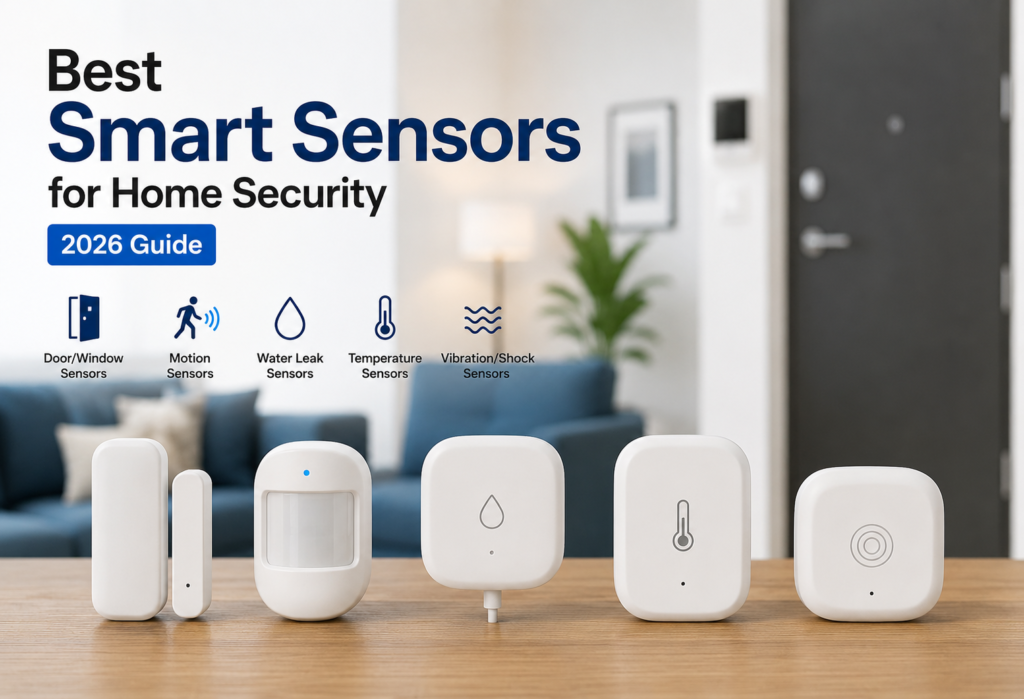
Picture coming home to find your front door slightly open—or discovering a basement leak that started hours ago. Situations like these show why smart sensors are an essential part of modern home security.
Unlike cameras, which primarily show you what happened, smart sensors can detect events as they occur. Door and window sensors can alert you when an entry point opens, motion sensors can detect activity, and water leak sensors can warn you about potential flooding.
Smart sensors also work alongside cameras, smart locks, alarms, and smart lights to create a more responsive security system. For example, a motion sensor can trigger a camera recording or turn on lights, while a door sensor can send an immediate alert to your phone.
In this guide, we’ll cover the best smart sensors for home security in 2026, including door, window, motion, water leak, and other useful sensor types. You’ll learn which options are worth buying and how to choose the right sensors for your home, apartment, or budget.
Table of Contents
What Are Smart Home Security Sensors?
How Smart Sensors Work
Smart home security sensors are tiny electronic gadgets that sense particular environmental factors within your home and then issue an alert in case there is any change. The advanced technologies being utilized by most of the current-day sensors include magnetic switch contacts for doors, passive infrared for movement, and acoustic sensors for glass breakage.
It all occurs thanks to wireless communication technologies, such as WiFi, Zigbee, or Z-Wave. As soon as the sensor senses activity, it immediately communicates this to a control panel or to your mobile phone. It only takes a few seconds to complete.
The difference between smart sensors and conventional alarm sensors is that smart ones provide notification details right on your phone. Rather than sounding a siren alarm, smart sensors will inform you about what door was opened and where the motion was detected even if you are on the other side of the globe.
Why Sensors Matter
Early warning is provided by smart sensors that can help to turn minor issues into major catastrophes. If you install a water sensor in your basement, it will notify you about a minor leakage which can easily turn into a flood later. Door and window sensors will inform you about any burglary attempts while the intruders are still outside.
These sensors give you an opportunity to have an automation system which makes your house more comfortable and energy-efficient. Motion sensors will automatically activate lights in case you enter the room, while door sensors will disarm the security system.
However, first of all, smart sensors increase home protection because they are not covered by the areas of cameras and locks. They monitor the premises around-the-clock without any need to be concerned with privacy and even without electricity supply due to batteries.
Types of Smart Security Sensors
🚪 Door Sensors
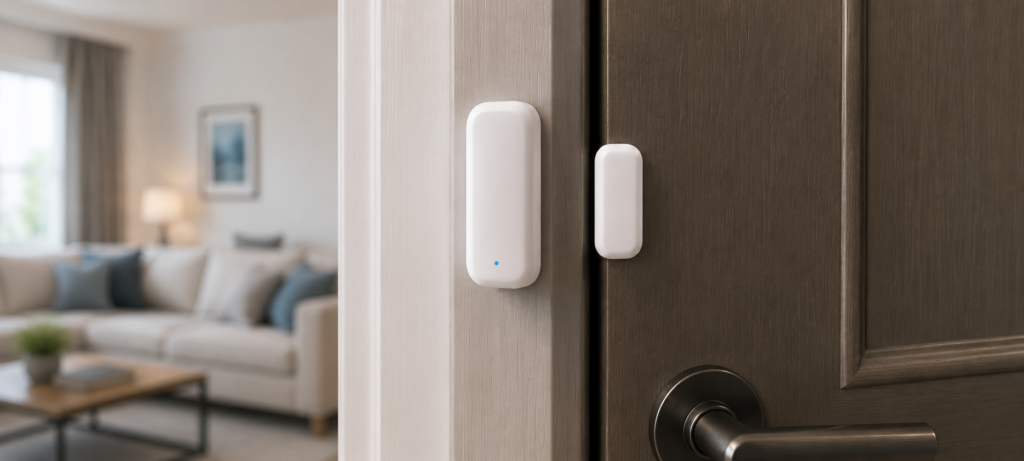
Door sensors have two components, namely, a magnetic switch that is placed on the door frame, and a sensor that is placed on the door. When the door is opened, the connection of the magnet is lost, which triggers the alarm system. Door sensors are important in ensuring security at access points and are the first sensors that one installs.
Best Uses:
- Front door security monitoring
- Back door or side door access
- Access into the garage from the main door of the house
The modern door smart sensors are small and not easily detectable by the naked eye; some of them can actually be painted to blend in with the door frame. The sensors can be installed mid-point along the door frame and work perfectly well when installed in line with the specifications provided by the manufacturers.
🪟 Window Sensors
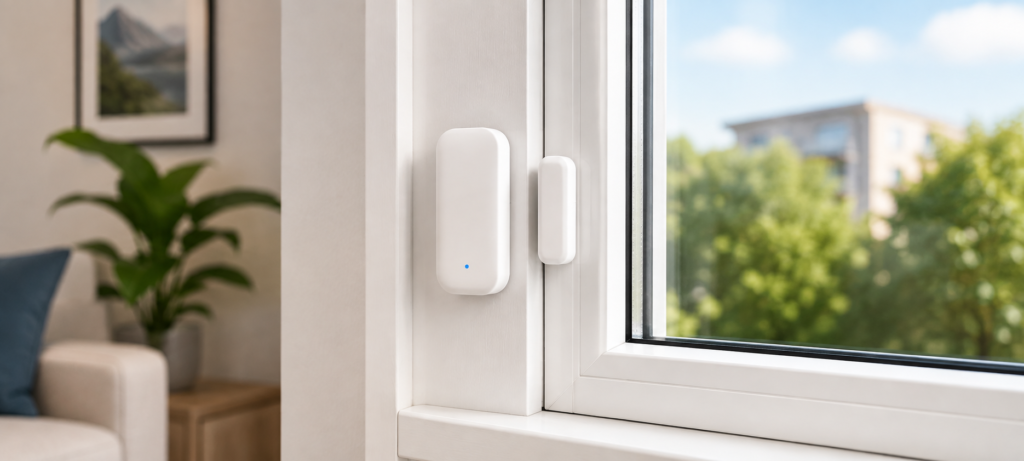
Window sensors operate just like door sensors, albeit tailored to the specifics of window monitoring. They tend to be smaller and less obtrusive because windows need an aesthetic look. More advanced smart sensors will differentiate between the window being opened by a person or vibration caused by wind or cars.
Best Uses:
- Windows in the ground floor that are easy to access from the outside
- Sliding windows and patio doors
- Windows in basements which are usually neglected
Window sensors should be installed properly. In most situations, the window sensors should be installed on the movable section of the window and the magnet installed in the frame of the window.
🚶 Motion Sensors
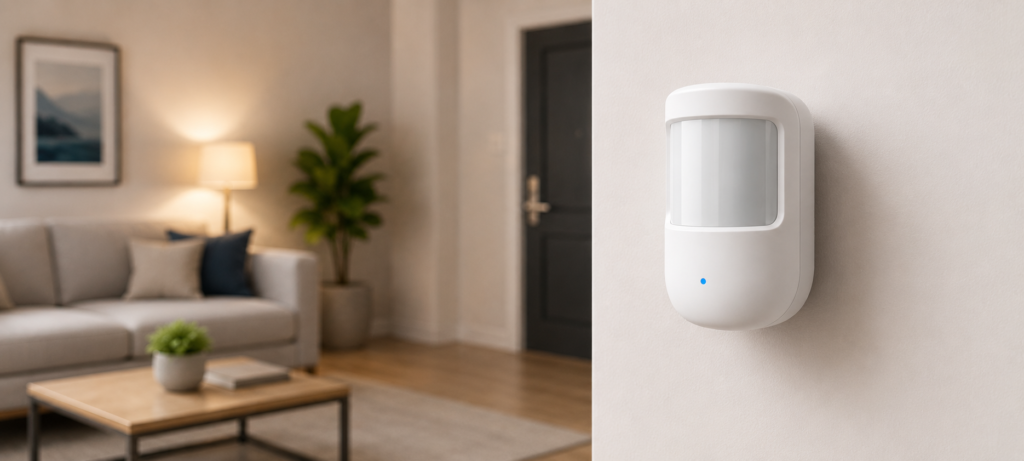
Motion sensors are capable of detecting heat signals using the Passive Infrared technique that enables detection of moving bodies. Modern motion sensors are able to differentiate pets from human beings, thus minimizing false alarms. Some types incorporate light sensors for increasing sensitivity according to the time of day.
Best Uses:
- Halls and main access points in your house
- Living rooms and common areas that invaders may have to pass by
- Entrances as a supplement to door/window sensors
It is better to install motion sensors in the corner of the room since they can cover more ground that way. Never place them near the vents, radiators or places exposed to sunlight.
💥 Glass Break Sensors
Glass break sensors use acoustic detection to identify the specific sound frequency of breaking glass. They can monitor multiple windows in a room from a single location, making them efficient for homes with many windows. Advanced models can distinguish between glass breaking and other loud noises like dropped dishes.
Best Uses:
- Large windows that would be expensive to sensor individually
- Patio doors and sliding glass doors
- Rooms with multiple windows facing the street
These sensors typically have an effective range of about 25 feet, so one sensor can often protect an entire room. They’re particularly useful for older homes where installing individual window sensors might be challenging.
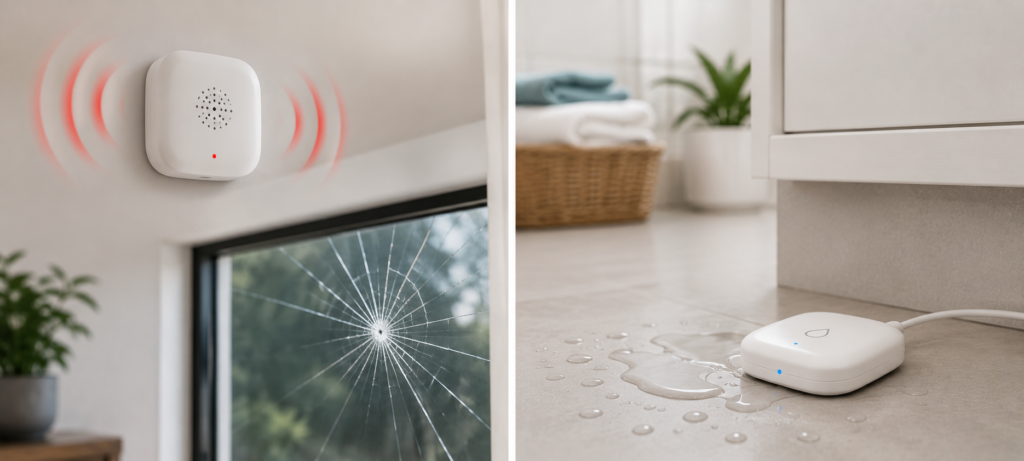
💧 Leak & Water Sensors
Water sensors help prevent costly water damage by detecting water and flooding. Water sensors at their simplest sense water, but more advanced sensors can even sense humidity and temperature changes that could indicate an issue prior to water becoming evident.
Best Uses:
- Kitchen around sink and dishwasher
- Bathroom around toilet and bathtub
- Basement and utility room where water heater and HVAC systems are located
Install water sensors in places where leaks will most likely form. There are some water sensors that come in rope style.
Key Features to Look For
Battery Life
The battery life will vary based on the kind of sensors you are getting as well as the brand name. The top-of-the-line sensors have 1-3 years of battery life, and water sensors might work for up to 5 years. It is best to opt for sensors that notify you about their low battery life well before the batteries die out.
Wireless Connectivity
There are different types of connectivity features and each has its own benefits:
WiFi smart sensors connect directly to the WiFi router and provide the quickest notification service possible. These sensors tend to use more energy and can have trouble connecting in locations where there is a weak WiFi signal.
Zigbee The zigbee works on the concept of mesh network, where the sensors communicate with one another and offer better stability and range of connectivity. It is energy efficient and suitable for bigger houses.
Z-Wave The Z-Wave gives you similar connectivity options as the Zigbee, but runs at a different frequency that won’t interfere with your Wi-Fi.
Matter is the latest protocol that works on all kinds of smart homes.
Smartphone Alerts
High-quality smart sensors must provide you with immediate alerts from your smartphone, providing you with useful information. Seek out applications that give you an option to set up custom tones and alert times, ensuring that you don’t get non-urgent alerts when sleeping.
Smart Home Integration
The best sensors can integrate flawlessly with the most popular smart home systems such as Alexa, Google Home, and Apple HomeKit. Such integration gives you an option to automate certain processes and even add sensors to your smart home routines.
Easy Installation
Current sensors have to install themselves without any tool and by utilizing adhesive tape or screws. Do not consider sensors that will need professional installation unless you are setting up a whole security system.
Best Smart Sensors for Home Security in 2026
| Sensor | Type | Connectivity | Battery Life | Best For |
|---|---|---|---|---|
| Ring Alarm Contact Sensor | Door | Z-Wave | 3+ years | Entry Doors |
| Aqara Door & Window Sensor | Window | Zigbee | 2+ years | Smart Homes |
| Philips Hue Motion Sensor | Motion | Zigbee | 2+ years | Indoor Security |
| SimpliSafe Glassbreak Sensor | Glass Break | Proprietary | 3+ years | Large Windows |
| YoLink Water Leak Sensor | Leak Detection | LoRa | 5+ years | Water Damage Prevention |
🥇 Best Door Sensor: Ring Alarm Contact Sensor
Ring Alarm Contact Sensor deserves its title of the best door sensor because of its reliable work and the fact that it uses Z-Wave connectivity, which gives it excellent signal strength all around most homes. Moreover, the sensor is designed in such a way that it suits the majority of doors.
Pros:
- Excellent 3+ year battery life
- Strong connection through the Z-Wave mesh network
- Works seamlessly with other Ring devices
- Easy DIY installation
- Works perfectly in different weather conditions
Cons:
- Needs Ring Base Station to function
- Poor integration with non-Ring devices
- Larger compared to some similar models
Best For: Homeowners who prefer monitoring the entry points of their houses and need an all-around solution for home security.
🥈 Best Window Sensor: Aqara Door and Window Sensor
The Aqara Door and Window Sensor stands out for its tiny size and excellent smart home integration. Using Zigbee 3.0, it works with most major smart home platforms while maintaining impressive battery life in a remarkably small package.
Pros:
- Compact design
- Great platform compatibility
- Budget-friendly price
- Fast reaction time
- Long battery life due to compactness
Cons:
- Needs a compatible hub to operate
- Adhesive is hard to remove
- Limited range in large houses
Best For: Smart home enthusiasts who want discreet sensors that integrate well with existing automation systems.
🥉 Best Motion Sensor: Philips Hue Motion Sensor
The Philips Hue Motion Sensor is highly suitable for security monitoring and home automation purposes. Even though it has been specifically designed for controlling lights, it is highly suitable for security purposes indoors, when paired with Philips Hue lighting systems.
Pros:
- Excellent pet immune capabilities
- Built-in light sensor
- Seamless Hue ecosystem integration
- Highly suitable for automation purposes
- Excellent motion detection performance
Cons:
- Relatively more costly than ordinary sensors
- Some of the best capabilities work only in the Hue ecosystem
- Designed for indoor use only
Best For: Individuals with Philips Hue lighting systems who require motion sensors for both security and automation purposes.
🏅 Best Glass Break Sensor: SimpliSafe Glassbreak Sensor
This SimpliSafe Glassbreak Sensor is a great acoustic sensor with few false alarm activations. The ability of this sensor to distinguish between glass break and other noises in the house makes it ideal for homes where there are kids and pets around.
Pros:
- Low chances of false alarms
- Ability to protect multiple windows with a single sensor
- Does not require any wires during installation
- Efficiency in power consumption
- Very efficient use irrespective of the size of the room
Cons:
- Compatibility with Simplisafe system only
- Incompatible with most of the smart home gadgets
- Too expensive compared to window sensors
Best For: Homeowners with multiple large windows who prefer comprehensive glass break detection over individual window sensors.
💧 Best Leak Sensor: YoLink Water Leak Sensor
YoLink Water Leak Sensor is powered by the ability to use the long-range and battery of the device thanks to LoRa wireless technology. The device can work at the distance up to 1,000 feet from the hub, which makes it perfect for use to monitor water leaks in remote areas like detached garages or corner basements.
Pros:
- Exceptional 5+ year battery life
- Excellent wireless range
- Can function in areas without WiFi signal
- Affordable price
- Accurate water leak detection
Cons:
- Needs YoLink hub
- Less integration in a smart home ecosystem
- Basic app when compared to others
Best For: Homeowners that require monitoring leaks in remote areas or properties that are too large for WiFi-based devices to reach.
⭐ Best Premium Sensor Ecosystem: Abode Mini Door/Window Sensor
The Abode Mini Door/Window Sensor is one of the premium choices for customers seeking to protect their property at a professional level while retaining smart home conveniences. Multiple wireless protocols and professional monitoring distinguish this sensor from other choices aimed specifically at consumers.
Pros:
- Multiple wireless protocols (WiFi, Zigbee, Z-Wave)
- Professional monitoring
- Good quality and reliable operation
- Good smart home integration
- Wide security ecosystem
Cons:
- Premium pricing
- Monthly costs of professional monitoring
- Complicated installation process
Best For: Those concerned about the security of their house and willing to invest into premium solutions.
Smart Sensors vs Security Cameras
| Feature | Smart Sensors | Security Cameras |
|---|---|---|
| Detect Activity | Yes | Yes |
| Record Video | No | Yes |
| Privacy Friendly | High | Moderate |
| Cost | Lower | Higher |
| Battery Life | Years | Weeks/Months |
| Weather Resistance | Excellent | Good |
| Installation Complexity | Simple | Moderate |
Sensors and security cameras have different but complementary uses for security in homes. The sensors are best for immediate detection and they work well in personal places such as the bedroom where cameras would be an intrusion. They also work well in extreme weather and are low maintenance.
The cameras are used for verification and collecting evidence but are costly to acquire and maintain. They also present privacy issues since there is always a camera that records everything and requires bandwidth to store the videos. In my opinion, good security systems are those that use sensors and cameras.
Most people should start by acquiring the sensors then adding cameras when need arises.
Best Places to Install Smart Security Sensors
Front Door: Fit sensors to your front doors which can be accessed directly to gain entry to your house.
Back Door: Your back entrance is always vulnerable since it is not easily visible to anyone on the road outside. Don’t neglect to fit sensors to patio and deck entrances.
Ground-Floor Windows: Look at windows which are visible at ground floor level and which are not easily noticeable from the street level due to landscaping or other factors.
Hallways: Sensors in the main hallways of your home will sense movement within the home and will automatically turn the lights on when you are making nighttime bathroom visits.
Garages: Both your garage door and your door leading to the rest of the house from the garage need to be watched. This room has valuables inside of it and is also a secret entry point into your house.
Utility Rooms: Water sensors around water heaters, washers, and HVAC units can help avoid expensive damage from floods.
Pro Tip: Start with entry points and add smart sensors gradually. This approach lets you learn how each sensor behaves in your specific home environment before expanding your system.
How to Choose the Right Sensor for Your Home
Apartment vs House: While those living in apartments should consider door sensors and water leak detection devices, those residing in houses must choose comprehensive security solutions that include window sensors and motion detectors.
Security Goals: Decide whether you need simple intrusion detection solutions or more comprehensive solutions that can detect environmental threats such as water leaks and temperature change.
Existing Smart Home Platform: Select sensors that work best with your smart home system. For example, if you heavily rely on Alexa, choose sensors that have good Alexa integration.
Budget Considerations: While entry level sensors can give you excellent security, the premium range offers some extra features. This can help you save money in the long run.
Your lifestyle also matters. If you are often out of town, you should consider sensors that send highly informative alerts to your smartphone. Pet immune motion sensors should be considered if you have pets at home.
Common Sensor Installation Mistakes
Poor placement The main problem is improper installation of devices. Door sensors are supposed to be installed on the frames of doors and not on doors themselves. Motion sensors must have full visibility of the room that needs to be controlled.
Ignoring battery alerts Another big mistake is ignoring notifications about low battery of the sensor. It is better to install notifications of such kind on your phone in order not to miss this.
Weak WiFi coverage Weak signal of the WiFi network leads to unstable operation of your security system and you may receive no notification at all. You should check the signal of the WiFi network in advance or install sensors with mesh capability.
Incorrect sensor alignment of the magnets is a reason for malfunctioning of door and window sensors. Pay attention to aligning the magnets correctly while installing the sensor.
Be sure to read the whole manual before you install a smart sensors and test it after installing it.
❓FAQs
Are smart sensors worth it?
Definitely. Smart sensors offer 24/7 surveillance and alerts at a much cheaper price than professional security systems. They are capable of preventing break-ins and water damage in addition to providing convenience with home automation.
Which sensor is most important for home security?
Door sensors placed on key entry points will offer the most vital security coverage. Begin with installing them on your front door and any other point where you have access to your house.
Do smart sensors work without WiFi?
Some smart sensors use network technologies like Z-Wave and Zigbee, which do not require an internet connection to function. But you will need an internet connection for mobile alerts away from home.
How long do sensor batteries last?
High-quality smart sensors tend to last 1-3 years on the same battery pack, while some water sensors can last up to 5 years. Battery lifespan varies according to the frequency of usage and environmental conditions.
Can smart sensors trigger smart home automations?
Yes, modern-day smart sensors can be used to automate home devices such as lights, cameras, alarm systems, and many more. This is among the top benefits of using smart sensors instead of regular alarm sensors.
What is the best smart sensor for beginners?
The ideal smart sensor for beginners would be a door sensor. The best door sensor you can try out is the Ring Alarm Contact Sensor.
🔗Related Articles
- Smart Home Security Systems in 2026 (Expert Buyer’s Guide)
- How to Build a Smart Home Security System (Ultimate Guide 2026)
- Schlage Smart Lock Review (2026): Is It Worth Buying?
- Best Smart Security Cameras for Home in 2026 (Complete Buyer’s Guide)
- How to Place Security Cameras for Maximum Protection (2026 Guide)
- Best Smart Video Doorbells for Home Security in 2026 (Complete Buyer’s Guide)
- Common Smart Home Security Mistakes to Avoid (2026 Guide)
- Best Smart Home Security Systems WITHOUT Subscription (2026)
- Best Matter Smart Home Devices in 2026: Top Picks for Beginners
🚀Final Verdict
Best Overall Sensor: The Ring Alarm Contact Sensor is the best sensor in terms of reliability, battery life, and usability when considering the needs of average homeowners that begin to explore the world of smart home security.
Best Budget Sensor: The Aqara Door and Window Sensor presents a cost-effective option with high smart home functionality.
Best Smart Home Sensor: The Philips Hue Motion Sensor is the most suitable sensor for people who need sensors with multiple functionalities for their home security and automation.
Final Recommendation: First of all, install door sensors on all your entrance doors; next, get some motion sensors inside your house, as well as water sensors for the prevention of leaks. It is a great way to be protected and still not exceed the budget. Find smart sensors which correspond to the existing platform in your smart home and pay more attention to battery life and reliability than any other feature you might never use.
The main thing about the home security is its constant control. Good quality smart sensors placed in proper places will protect you for many years.